
Roman Silversmithing
Making a silver pot. The second of three sections of a lecture delivered at Penn State.

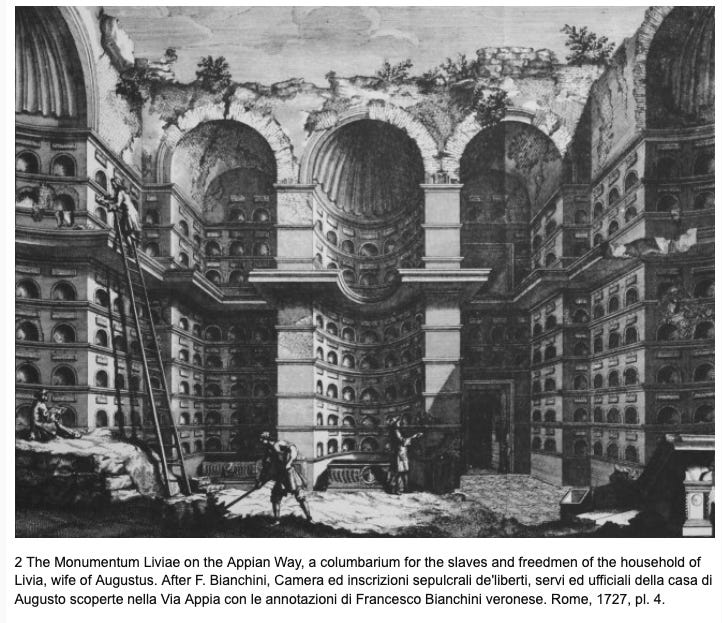
In our last post we met Agatho, a silversmith who lived at the time of Augustus. At exactly the time Agatho died (c. 25 CE), Livia, the widow of Augustus, maintained a columbarium, a burial chamber, used exclusively for interring her own slaves and freedmen and those of her immediate family who lived in or near Rome (and not at their vast estates elsewhere). This facility, today called the Monumentum Liviae, was run by some of her Rome-based slaves and freedmen. The dead included three freed and two enslaved goldsmiths (aurifices), a silversmith (argentarius), an enslaved gilder (inaurator) who belonged to one of Livia’s freed smiths, and a margaritarius, who set her pearls in gold or silver. All of these precious metal workers were men, but there is a record of the burial at contemporary imperial columbarium, the Monumentum Marcellae, of an enslaved female silver-worker who belonged to an unspecified Augusta, probably not Livia. Here there were three more silversmiths and another named as a chaser or engraver (caelator), a silversmith who raised designs on metalwork or carved designs into them. Agatho is portrayed with the tools of the chaser, and a cup with a raised figure.[1]
As we can understand from this partial list of jobs, the production of silver goods was broken down into many sub-specialisms of greater and lesser skill. We have not so far mentioned others, like vascularii, who shaped sheet metal into forms; flaturarii, who cast and attached basic elements, like handles and bases; crustarii, who cast and attached more decorative elements; and tritores, polishers. We even have an account by St. Augustine of how silversmiths worked, a metaphor for polytheistic religion, where many gods looked after specialist areas.
